MACOR® is a “machinable” ceramic that’s sometimes used in Electic Propulsion thrusters among other things.
Here are some notes on machining MACOR®:
- Use Boron Nitride instead.
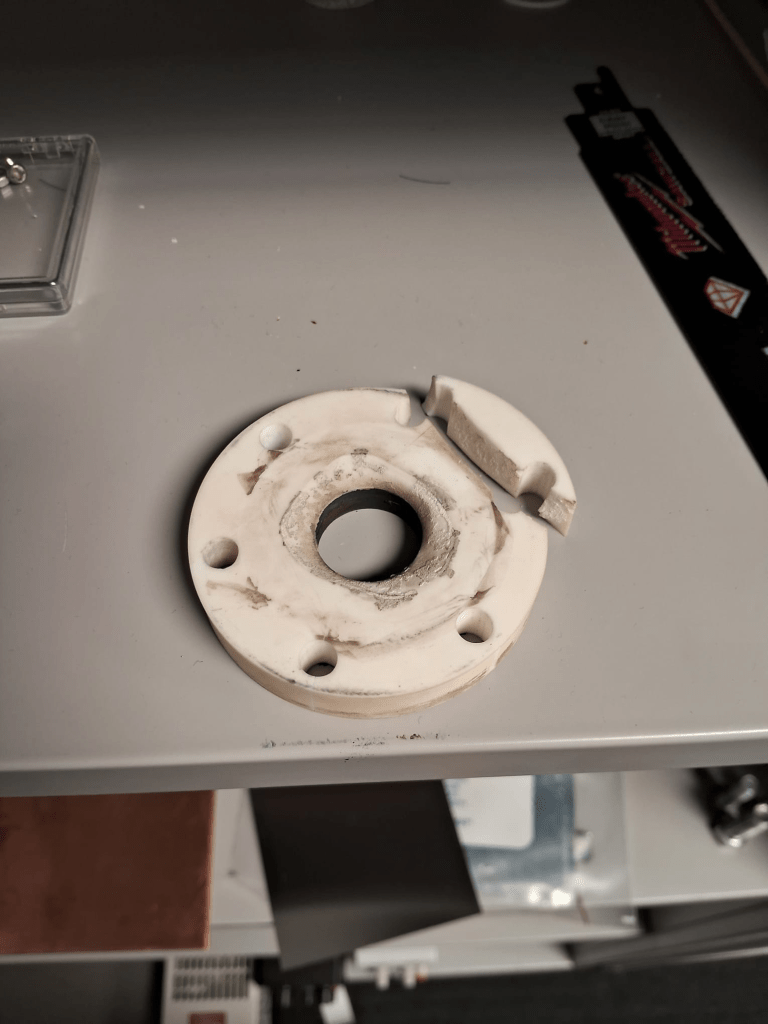
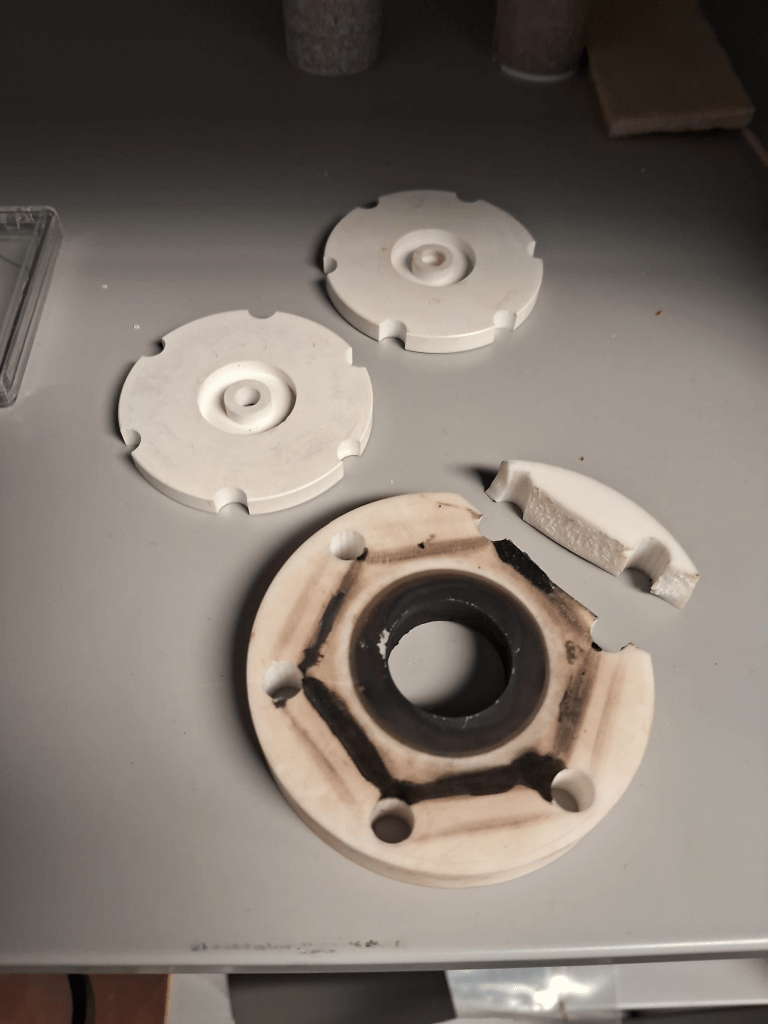
- If you (like me) already blew your budget on buying MACOR® stock, you must use coolant while machining. Else it will crack.
- Ideally, use carbide end mills. Some machine shops (including Rose-Hulman’s PHOE Department machine shop) only have high-speed steel, which wears out FAST when working with MACOR®, and then it will crack.
- It may randomly crack.
- Buy some ceramic glue to put together broken parts if you don’t have the budget to buy new stock.
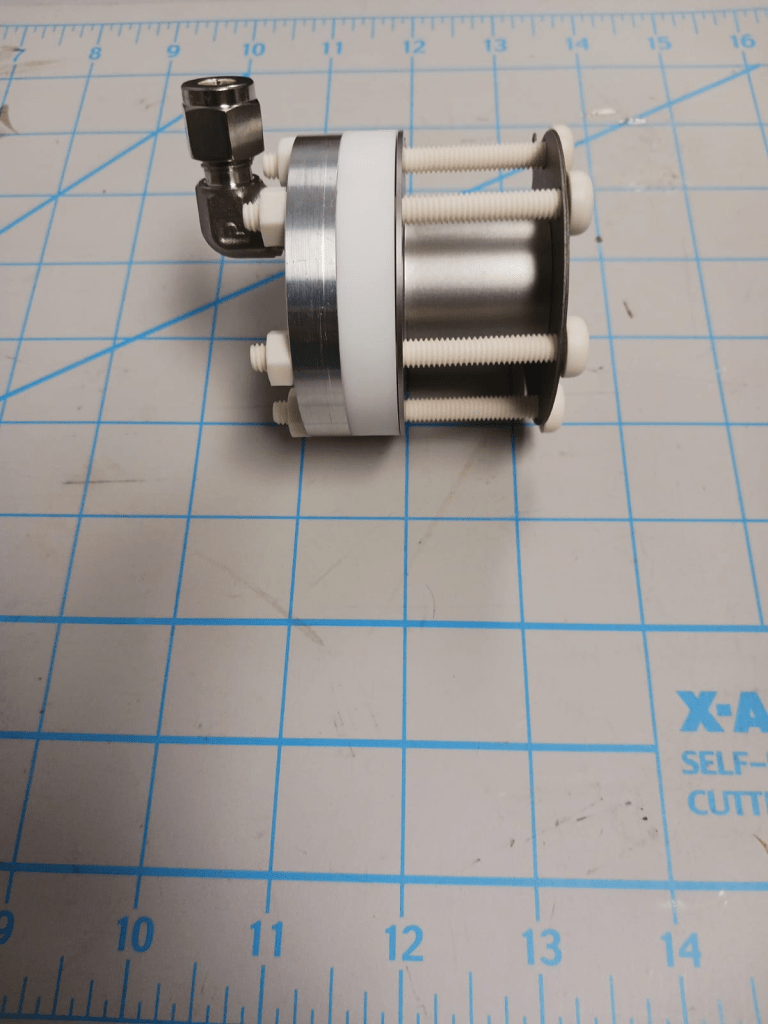
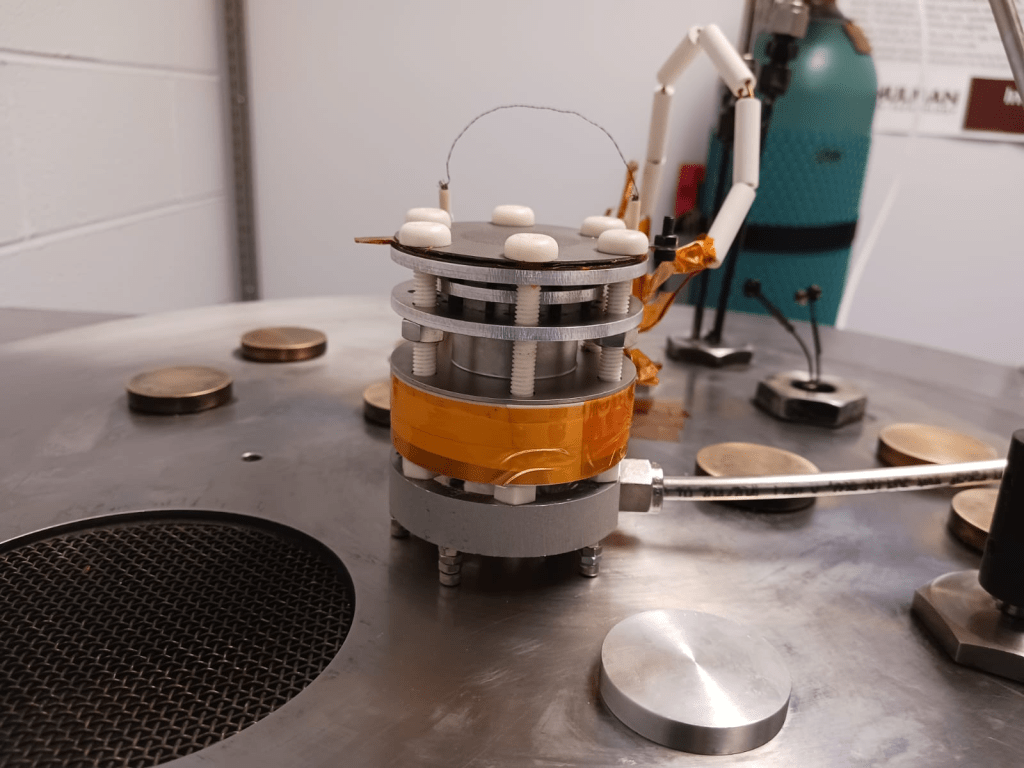
Boron Nitride (h-BN) ceramic is as pricy, but it’s very chill! Easy to machine with steel bits. I would recommend BN for your day-to-day Electric Propulsion experiments but would be more careful about material selection for your actual space missions.
“It’s like machining butter” -Roger Sladek, PHOE machinist, about h-BN.
 Khaki Jungle
One reply on “Machining MACOR®”
So cool! Will definitely use this information next time I make a plasma thruster!
LikeLiked by 1 person